
Heart Rate Monitors and Accessories
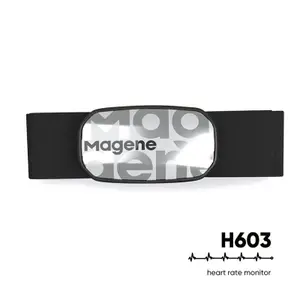
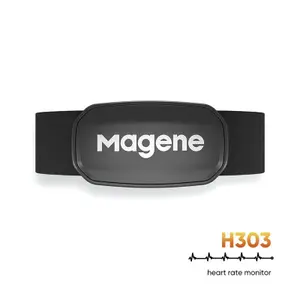
Why buy a belt if I have a watch?
It's a matter of technology. The watch "estimates" your pulse via blood flow (optical), while the belt "measures" the electrical activity of your heart. This difference is critical for two specific uses:
1. Heart Rate Variability (HRV)
This is the new key metric for measuring your fatigue state and recovery. To be calculated, HRV needs to measure the exact interval (in milliseconds) between two heartbeats (R-R interval). Only a chest strap (like the Polar H10 or Garmin HRM) offers the necessary precision to provide usable HRV data. The wrist is often too inaccurate for this fine analysis.
2. Swimming and Water
This is the weakness of optical. Water seeps between the watch and your skin, completely distorting heart data. Furthermore, Bluetooth/ANT+ signals cannot pass through water.
The solution? Specific belts (Garmin HRM-Pro or HRM-Swim) that have internal memory. They record your heart rate underwater and sync with your watch as soon as you get out of the water. It's the only way to analyse the intensity of your swimming sessions.
3. Running Dynamics
Beyond the heart, high-end belts (Garmin HRM-Pro Plus) integrate accelerometers that measure your stride: ground contact time, vertical oscillation, left/right balance. Valuable data to improve your running technique that a watch alone cannot provide with the same precision.